Choosing deck materials for a GTA backyard
Pressure-treated, composite, or hardwood? A grounded look at how each decking material holds up to Ontario seasons, how much upkeep it really asks of you, and how to match the choice to the way you actually use your yard.
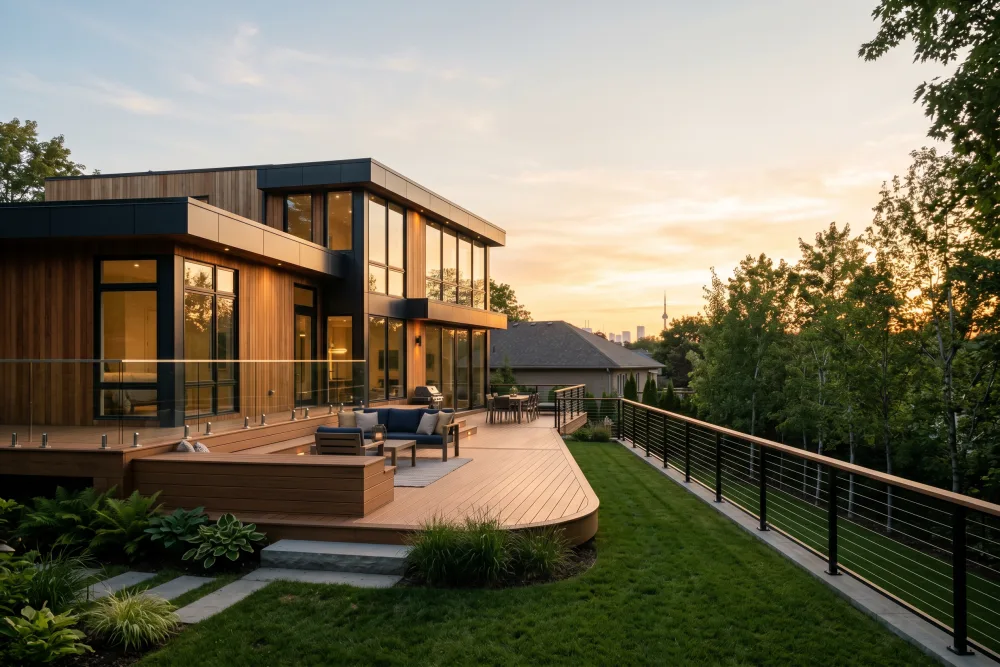
Start with how you actually use the space
Before you compare boards, be honest about how the deck will live. A deck that hosts weekend dinners and holds a heavy table wants a different structure than a quiet reading corner off the kitchen. The way you use the space drives the size, the framing, and the surface material, which is usually the part homeowners jump to first.
Three questions settle most of the decision:
- How much upkeep are you willing to do each year, honestly?
- Does the look of natural wood matter to you, or do you want it to disappear into the background?
- Is the deck in full sun, deep shade, or splashed by a pool?
Keep those answers in mind while you read the three material families below. There is no single best board: only the right trade-off for your yard.
Pressure-treated wood
Pressure-treated softwood is the workhorse of the Canadian backyard, and for good reason. It is the most budget-friendly way to get a solid, code-worthy deck, it takes fasteners and cuts cleanly on site, and it is forgiving to repair one board at a time years down the road.
The trade-off is maintenance. Left alone, pressure-treated boards grey out, and Ontario freeze-thaw cycles will raise the grain and open small checks over time. Boards can also cup or check if they go down before they have dried out. To keep it looking cared-for you are cleaning it each spring and re-staining every couple of seasons. It suits homeowners who want the most deck for their budget and do not mind the seasonal upkeep.
Fresh pressure-treated lumber often arrives damp from the mill. Let it dry out and stabilize before you stain, or the finish will not take. A patient first season pays off for a decade.
Composite and PVC
Composite and PVC boards trade upfront cost for years of low effort. There is no staining and no sealing: an occasional wash keeps them looking right. Colour and grain are consistent board to board, and the better product lines resist rot and splintering while holding their appearance well through hard sun and hard winters.
They are not maintenance-free, and they are not wood. Cheaper composites can hold heat in full afternoon sun, and the look, while good, reads as engineered rather than natural up close. You are also paying more at the start in exchange for handing back most of the yearly upkeep. Composite suits homeowners who want to use the deck rather than service it.
Cedar and hardwood
For a natural, high-end look, cedar and tropical hardwoods are hard to beat. Cedar is light, naturally resists rot, and stays cooler underfoot. Dense tropical hardwoods are extremely durable and give you a rich, furniture-grade surface.
The catch is care. To hold their colour, these woods want regular oiling; skip it and they weather to a silver-grey, which some homeowners actually prefer, and which is a perfectly valid choice as long as it is a choice. Hardwoods are also the priciest option and the most demanding to work with, which is where an experienced crew earns its keep. This is the option for homeowners who want a natural, premium surface and are willing to maintain it.
How GTA weather shapes the choice
Anything you build here lives through a wide swing: humid summers, freeze-thaw shoulder seasons, and a real winter. That cycle is what ages a deck, so it belongs in the decision, not as an afterthought.
Moisture management matters more than the brand on the board. Proper gaps for drainage, the right fasteners so nothing works loose as the wood moves, and a substructure that sheds water are what separate a deck that ages gracefully from one that feels tired in five years.
Boards installed with no drainage gap trap moisture against the frame. In a freeze-thaw climate that is how a deck rots from underneath while the surface still looks fine. Detailing beats material choice every time.
Matching material to the upkeep you will actually do
The most common regret we hear has little to do with cost. It is almost always about upkeep that never happened. A beautiful hardwood deck that is never oiled ends up looking worse than a simple pressure-treated deck that gets its spring clean. Be realistic about the effort you will put in, then choose accordingly.
| Material | Upkeep | Lifespan | Best for |
|---|---|---|---|
| Pressure-treated | Annual clean, periodic stain | Long with maintenance | Budget-conscious builds |
| Composite / PVC | Occasional wash | Long, low effort | Hands-off homeowners |
| Cedar / hardwood | Regular oiling to keep colour | Varies by species and care | A natural, premium look |
Pick the row that matches the weekend you are willing to give it.
Get the structure right first
Whatever you put on top, the surface is only as good as what holds it up. Footings below the frost line, a frame that is level and square, joists spaced for the board you have chosen, and flashing where the deck meets the house: these are what decide whether a deck is safe and lasts.
Many municipalities require a building permit for a deck above a certain height or attached to the home. Requirements vary, so confirm what applies with your local building department before you start. Getting that right up front is far cheaper than fixing it later.
Written by Blue Knight Renovations, one crew building decks, fences, framing, concrete, and siding across the Greater Toronto Area.